
Digital photography, Adobe Photoshop, and the RAW file format open up many new possibilities for photographers. Digital photographs only exist as data, 0s and 1s, and can therefore be spread and reproduced by anyone who owns a computer. Photoshop allows you to alter (or "photoshop") these digital photographs, allowing for the creation of images that either appear to be real despite their extrodiary (almost magical) nature, or are clearly "removed" from reality, existing in manner similar to that of the surrealists. RAW files allow photographers to edit the very settings of the camera used to take the photo, allowing for the adjustment of exposure, white balance, and color after the actual photo. While artists are busy exploring the possibilites of these techniques/tools, others find themselves scrambling to understand the implications of these techniques on the traditional notion that photographs represent reality (or, as Bazin states, that the artist in photography is nature, not humans) and trying to defend themselves against the issues digital techniques create.
Journalism, in particular, has been struggling to understand how to react to photography in 0s and 1s, particularly because it threatens the conception of "truth" that journalism strives to represent. The National Press Photographer Association has lain out a code of ethics, stating that photographers "do not manipulate images [...] that can mislead viewers or misrepresent subjects." This seeks to defend against the manipulation of the "real" that tools such as the image fulgurator use and draw attention to, in the fear that altering an image will cause those who view it to believe in an alternate version of history. Altering a photo can also add new implications to it; on the Time cover highlighting O.J. Simpson, removing the color saturation and "burning" the edges in what may have seemed to Time to be a way to add suspense, but ended up sparking a controversy over racism. The racist undertones that many saw in the image could have greatly changed perceptions of the events by mythologizing it. However, this power was diffused by Newsweek, who featured the unaltered photo on their cover. While the ability to recognize this type of photo manipulation was only given through subtractive abilities (this one is the original, therefore this one is not), photoshopping leaves behind noticable traces; pixels can be left out of place, or two locations in a photo may appear exactly the same. These aspects seem to diffuse whatever danger photoshopping may posses; they turned Iran's photos of missles into a popular meme, as these signs revealed the falseness of the photograph:

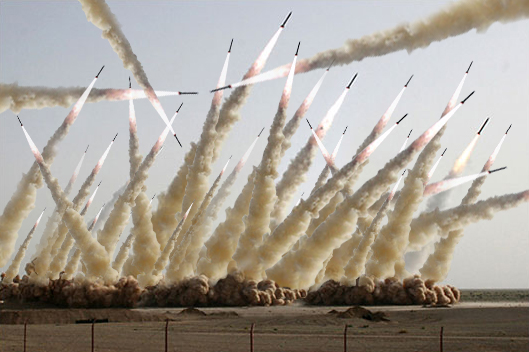
This means that the potential danger of photoshopping is undermined and perhaps negated by the mark it leaves and bestows upon the "original" photograph.
But again, not all editing is like this. In the case of the O.J. Simpson photograph, various elements in the actual chemical process (the process of creation) were altered to adjust the color of the image. RAW format digital photography makes this even easier, and even allows for greater control. However, if photography is not a "human" art, if the artist of photography is (as Bazin puts it) nature itself, how is it possible that, through use of various photographic techniques (in both the production and post-production phrases), one can manipulate a photograph and completely transform it so easily?
The danger becomes even more palpable with the discovery of photographs that have been vastly altered without use of digital techniques, that in fact pre-date computers? After purging various cabinet members and government officials, Stalin had them removed from photographs, hoping to erase them from "reality":


While he obviously couldn't erase them all from the "real" (due to both his actual existance and the inability of Stalin to destroy originals), one cannot deny that he was successful, to a certain degree; by displaying photographs in which the offender was suddenly absent, Stalin was able to make the public question his existance (as well as their memory).
There is a reason for this, one that both Barthes and Bazin tend to not discuss: photography is a human invention, a human tool. Bazin even goes as far as to separate the human from the photo, something that is impossible due to the inherent nature of "tools." Human agency is responsible for the creation of the photograph, and while the elements of the photo may be formed by nature, it is the photographer who frames the shot, adjusts exposure, and develops the photo. As these three examples show, this means that the "reality" that finds its way into the photograph can easily be manipulated by humans. It is the photographer who decides what to photograph, how to photograph it, how to develope and structure the physical copy, and ultimately which images should be preserved and should represent reality in the minds of the future.

No comments:
Post a Comment